martes, 20-10-2026
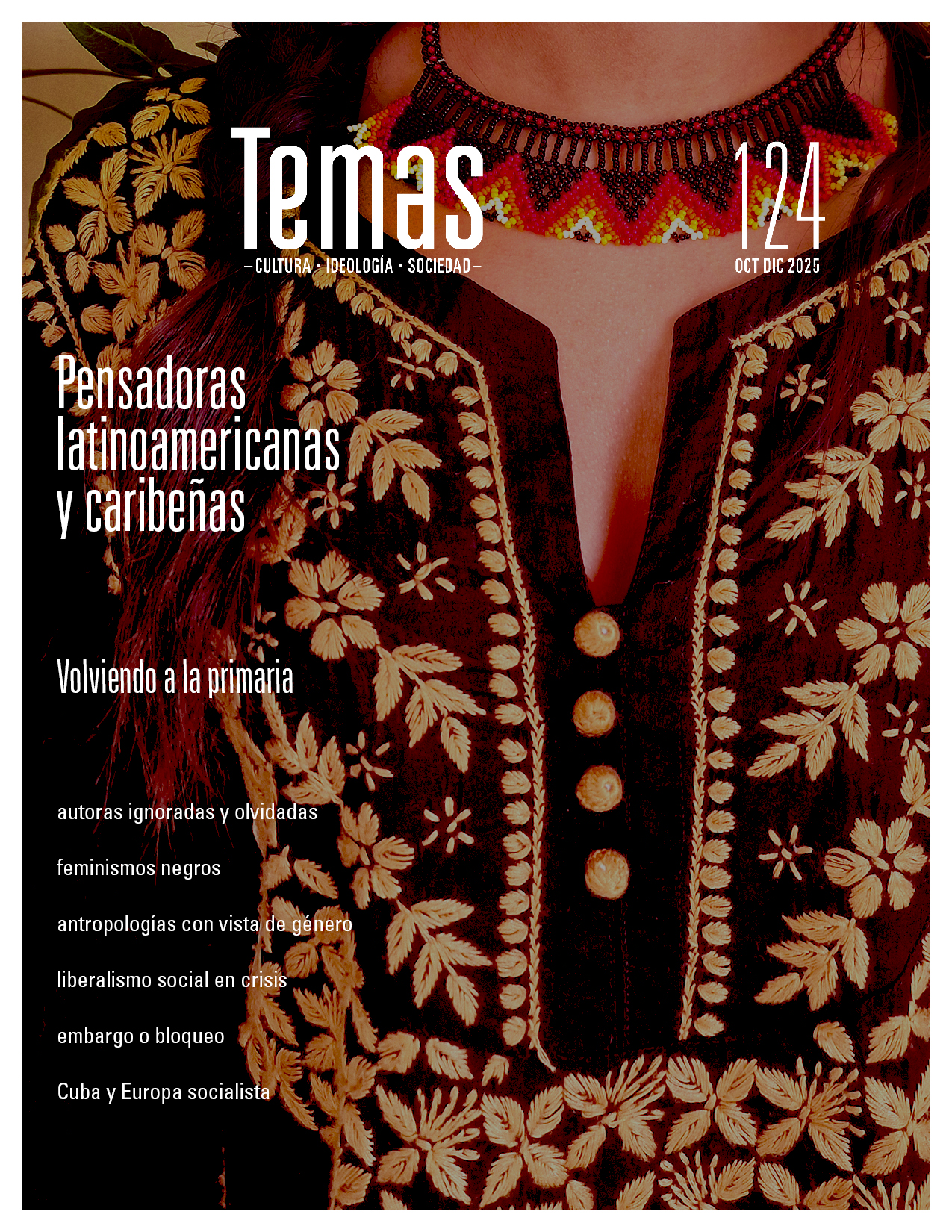
124
Pensadoras latinoamericanas y caribeñas
Del Tercer Congreso de Mujeres en Cuba al ejercicio de una epistemología de la resistencia, de la indagación del lugar de las mujeres en los movimientos políticos y su discusión de los mitos nacionales al vínculo del feminismo con las luchas de clases y antirracista, de la presencia femenina en los albores del movimiento de la negritud a la investigación antropológica como contribución a la discusión sobre la sociedad haitiana, estos ensayos ofrecen una perspectiva amplia y diversa sobre cuestiones fundamentales de nuestra historia, abordados por autoras de nuestros países.
Temas agradece a Zaida Capote Cruz, miembro de nuestro Consejo asesor, y colaboradora del proyecto sobre pensamiento crítico de mujeres en América Latina y el Caribe de la UNAM (México), por haber coordinado estas páginas que estimulan debates cruciales para la reflexión contemporánea, y que ponemos hoy a disposición de nuestros lectores.
Enfoque
El III Congreso Nacional Femenino, celebrado en La Habana en abril de 1939, constituyó un punto de inflexión en la historia del movimiento feminista en Cuba. Los dos primeros congresos, de 1923 y 1925, han sido calificados de liberales porque debatieron sobre la representatividad política, la inserción laboral de las mujeres o la protección a la maternidad, y porque solo pudieron asistir mujeres blancas de las clases más acomodadas, con la sola excepción de la despalilladora negra, Inocencia Valdés. Por su parte, el III Congreso, aunque arrastró algunas concepciones tradicionalistas sobre las mujeres, resultó rupturista en numerosos aspectos. Por ejemplo, por criticar la desigualdad de género en los ámbitos laboral, civil, político y educativo, por exigir igualdad de trato para las pobres y campesinas, o por denunciar el racismo y la segregación padecida por las afrocubanas. Además, intelectuales afrocubanas como Cloris Tejo, Ana Echegoyen o Esperanza Sánchez, participaron de su organización o en sus sesiones de debate. Este evento también resultó trascendental porque logró que los acuerdos alcanzados fueran debatidos por la convención encargada de redactar una nueva constitución en 1940.
The Third National Women's Congress, which took place in Havana in April 1939, represented a pivotal moment in the history of the feminist movement in Cuba. The initial two congresses, held in 1923 and 1925 respectively, have been characterized as liberal in nature. This is since they addressed issues such as political representation, the participation of women in the labor market, and maternity protection. Furthermore, it is noteworthy that attendance was restricted to white women from the most affluent classes, except for Inocencia Valdés, a black grape picker. The Third Congress, while perpetuating certain conventional conceptions of women, proved to be revolutionary in numerous respects. For instance, it has been observed to have denounced instances of gender inequality in the workplace, civil, political and educational spheres. Furthermore, it has called for the implementation of measures to ensure equal treatment for women from impoverished and rural backgrounds. In addition to this, it has issued a condemnation of the racism and segregation experienced by Afro-Cuban women. Moreover, Afro-Cubans intellectuals such as Cloris Tejo, Ana Echegoyen, and Esperanza Sánchez participated in the organization of the event and its debate sessions. This event was also significant because it ensured that the agreements reached were debated by the convention responsible for drafting a new constitution in 1940.
En este trabajo se aborda el estudio de las trayectorias intelectuales de Zora Neale Hurston Katherine Dunham y Maya Deren, quienes desempeñaron un papel activo en el desarrollo de un saber antropológico sobre el Caribe desde Estados Unidos, entre las décadas de 1920-1940. Aunque ninguna de las tres nació en el Caribe, sus obras se fundamentaron en las relaciones, las experiencias, los viajes, las prácticas y los saberes que escribieron y produjeron sobre el espacio antillano. Las tres pensadoras confluyeron en un interés común: el estudio del vudú. Sus investigaciones y escritos fueron pioneros en proponer una revalorización de la religión popular de Haití con base en un trabajo interdisciplinario que si, por un lado, anticipó fecundos diálogos entre la antropología y el arte, por otro, contribuyó a la introducción y difusión de las culturas afroantillanas dentro de la industria cultural estadounidense.
This work examines the intellectual trajectories of Zora Neale Hurston, Katherine Dunham, and Maya Deren, who played an active role in the development of anthropological knowledge about the Caribbean from the United States between the 1920s and 1940s. Although none of the three were born in the Caribbean, their work was grounded in the relationships, experiences, travels, practices, and knowledge they wrote and produced about the Antillean archipelago. The three thinkers shared a common interest: the study of Vodou. Their research and writings were pioneering in proposing a reevaluation of Haiti's popular religion based on interdisciplinary work that, on the one hand, anticipated fruitful dialogues between anthropology and art, on the other, contributed to the introduction and dissemination of Afro-Caribbean cultures within the American cultural industry.
Este artículo rinde tributo a la trayectoria intelectual de la periodista y narradora cubana Ofelia Rodríguez Acosta (1902-1975), cuya obra narrativa e intervenciones públicas retratan ampliamente la efervescencia del pensamiento feminista y las discusiones más acuciantes de su hora. Sus cuentos, artículos periodísticos y correspondencia dan fe de su actuación no solo como pensadora y militante feminista, sino también como opositora a la dictadura de Gerardo Machado. Un breve recorrido por su obra escrita comprueba el alcance de su legado.
This article pays tribute to the intellectual career of Cuban journalist and writer Ofelia Rodríguez Acosta (1902-1975), whose narrative work and public interventions broadly portray the effervescence of feminist thought and the most pressing discussions of her time. Her short stories, newspaper articles, and correspondence attest to her role not only as a feminist thinker and activist, but also as an opponent of Gerardo Machado's dictatorship. A brief overview of her written work demonstrates the scope of her legacy.
El artículo tiene como objetivo presentar las ideas de la costarricense Yolanda Oreamuno (1916-1956) en torno a la crítica que hace de los mitos nacionales, tales como el folclor. Dichos mitos son una forma de obnubilar otras formas en que el arte, en general, y particularmente la literatura podría expresarse. La tesis de este artículo versa en torno a la deconstrucción del nacionalismo. En la segunda parte se ocupa de dos textos en los que el Pater costarricense se manifiesta como el heredero del poder sobre las mujeres, esto a través del ensayo “¿Qué hora es?” y la novela La ruta de su evasión.
This article addresses the ideas of Costa Rican author Yolanda Oreamuno (1916–1956), specifically her critique of national myths, such as folklore. Following Oreamuno’s work, we present a deconstruction of nationalism, whose myths obscure other forms of expression in art, in general, and literature in particular. In the second part, we examine the figure of a Costa Rican Pater who manifests himself as the heir to power over women. This analysis will focus on two of Oreamuno’s texts: the essay «¿Qué hora es?» (What Time Is It?) and the novel La ruta de su evasión (The route of her Evasion).
Paulette Nardal (1896-1985) fue la primera mujer negra en estudiar en la Sorbona. Sus padres y hermanas son un referente del compromiso social, difusión de la cultura y vanguardia feminista en Martinica. Es la pieza clave para entender el vínculo entre el Harlem Renaissance y la Negritud. Su tesis de licenciatura aborda la novela La cabaña del Tío Tom de la abolicionista estadounidense Harriet Beecher Stow. Trabaja como periodista en la ONU, milita por el derecho al voto femenino en la isla, funda el coro llamado «Joie de Chanter» en Fort-de-France como parte de su militancia panafricanista en la recuperación de los cantos espirituales nacidos bajo el yugo de la esclavitud. Recupera y difunde los aportes teóricos de las mujeres intelectuales de Martinica, con lo cual se contribuye también a visibilizar el Caribe francófono, tanto en la investigación como en la enseñanza al dibujar otros horizontes geográficos donde el afrofeminismo germinó al mismo tiempo que las discusiones sobre la negritud, el anticolonialismo y el racismo, pero fueron silenciadas por el patriarcado.
Paulette Nardal (1896-1985) was the first Black woman to study at the Sorbonne. Her parents and sisters are a reference for social commitment, cultural dissemination, and feminist avant-garde in Martinique. She is a key figure for understanding the link between the Harlem Renaissance and Negritude. Her undergraduate thesis addresses the novel Uncle Tom's Cabin by the American abolitionist Harriet Beecher Stowe. She works as a journalist at the UN, campaigns for women's voting rights on the island, and founded the choir called «Joie de Chanter» in Fort-de-France as part of her Pan-African activism in recovering spiritual songs born under the yoke of slavery. She focused on the recovery and dissemination of the theoretical contributions of female intellectuals from Martinique, thereby also helping to give visibility to the Francophone Caribbean, both in research and teaching, by drawing other geographical horizons where Afro-feminism germinated at the same time as the discussions about negritude, anticolonialism, and racism were silenced by the patriarchy.
Comienzos de los años 1960. Una carta es depositada en el correo dirigida al presidente de EE.UU., John F. Kennedy, en protesta por el intento de invasión a Playa Girón. Figurar entre los perseguidos por los órganos de represión de Brasil por su amistad con el pueblo cubano. Protagonizar una polémica de repercusión internacional con Régis Debray acerca de la estrategia que conllevó la victoria de la Revolución. Trabajar arduamente para desentrañar desde la teoría la comprensión de las causas históricas y la experiencia concreta que resultaron en la victoria, mientras estudiaba los desafíos para el cambio estructural en su propio país. La vida y la obra de Vânia Bambirra se puede resumir desde su entrañable relación con la Revolución cubana. En este artículo, presentamos el itinerario del pensamiento y la militancia política de la intelectual brasileña quien, inspirada en los logros de la Revolución cubana y las luchas sociales del continente, ha sido una de las fundadoras y más importantes referentes de la Teoría Marxista de la Dependencia.
Early 1960s. A letter is mailed to U.S. President John F. Kennedy protesting the Bay of Pigs invasion. She is among those persecuted by Brazil's repressive forces for her friendship with the Cuban people. She engages in an internationally significant debate with Régis Debray regarding the strategy that led to the revolution's victory. She works tirelessly to theoretically unravel the historical causes and concrete experiences that resulted in the victory, while simultaneously studying the challenges for structural change in her own country. The life and work of Vânia Bambirra can be summarized by her deep connection to the Cuban Revolution. This article presents the trajectory of the thought and political activism of Vania Bambirra, Brazilian intellectual who, inspired by the achievements of the Cuban Revolution and the social struggles of the continent, has been one of the founders and one of the most prominent figures of Marxist Dependency Theory.
La ensayística de Yásnaya Aguilar Gil (1981), intelectual mixe, constituye un ejemplo de epistemología de la resistencia. Para ello se asume el racismo como un problema epistemológico desde las conceptualizaciones de Aníbal Quijano y Ramón Grosfoguel, y la conceptualización de José Medina sobre la epistemología de la resistencia. A partir del análisis de dos ensayos de Yásnaya Aguilar Gil, se devela la desarticulación que logra de las lógicas argumentativas naturalizadas por los procesos de racialización en México; se indaga en las estrategias utilizadas por la para lograr una fricción epistémica con el discurso racial. La labor escritural de Yásnaya Aguilar Gil puede conceptualizarse como una de las formas de imaginar resistencias, necesaria para la desarticulación del racismo.
The essays of Yásnaya Aguilar Gil (1981), a Mixe intellectual, constitute an example of the epistemology of resistance. We first propose that racism also constitutes an epistemological problem based on the conceptualizations of Aníbal Quijano and Ramón Grosfoguel. Subsequently, to understand the epistemology of resistance, we follow José Medina's conceptualization. Based on the analysis of two essays by Yásnaya Aguilar Gil, we examine the dismantling she achieves of the argumentative logics naturalized by the processes of racialization in Mexico. We investigate the strategies used by the author to achieve epistemic friction with racial discourse. Yásnaya Aguilar Gil's writing can be conceptualized as one of the forms of resistant imagination, necessary for the dismantling of racism.
Controversia
¿Qué factores intervienen en el proceso de la formación, de la educación y del aprendizaje? ¿Existe alguno más importante o con mayor influencia? ¿Qué problemas existen, en el actual contexto, en los que intervengan la escuela, la sociedad, la familia? ¿Cuáles afectan la calidad de la educación primaria? ¿Cómo se puede aplicar la máxima martiana de desarrollar el pensamiento creador en la escuela, dentro del actual sistema nacional de educación? Tres educadoras, una realizadora de audiovisuales y una estudiante de secundaria básica dialogan sobre la enseñanza primaria, ante un público involucrado.
What factors are involved in the process of training, education and learning? Is there any more important or more influential one? What problems exist, in the current context, in which school, society, and the family intervene? What affects the quality of primary education? How can Martí's maxim of developing creative thought in schools be applied, within the current national education system? Three educators, an audiovisual producer and a junior high school student discuss primary education in front of an engaged audience.
Entretemas
El artículo examina la transformación del liberalismo clásico cubano hacia formas de pensamiento liberal-social, en el contexto de los procesos revolucionarios, constitucionales y de crisis del Estado republicano ocurridos entre la Revolución del 30 y la caída del régimen de Batista en 1958. Durante este periodo, las élites intelectuales y políticas intentaron redefinir el papel del Estado y del derecho en función de un ideal de justicia social, buscando superar los límites del liberalismo económico tradicional. La Constitución de 1940 representó el punto culminante de ese esfuerzo: un pacto social que pretendía articular democracia liberal, soberanía nacional y derechos sociales, con la aspiración de consolidar un Estado moderno y moralmente responsable. No obstante, la fragilidad de las instituciones republicanas, la corrupción administrativa y el distanciamiento entre los principios constitucionales y la práctica política frustraron dicho proyecto reformista. El golpe de Estado del 10 de marzo de 1952 simbolizó el colapso del modelo liberal-social, al recurrir el gobierno de facto a la retórica de la justicia social para justificar un régimen autoritario. Ante el agotamiento del reformismo liberal, surgieron nuevas corrientes revolucionarias que retomaron el ideario constitucionalista, pero lo radicalizaron hacia un programa de transformación estructural del Estado y de la sociedad. El estudio concluye que, aunque el liberalismo social representó un intento significativo de modernización institucional y de ampliación de derechos, no logró resolver las tensiones entre libertad, justicia y desarrollo, allanando el camino a un proyecto revolucionario de mayor alcance.
The article examines the transformation of classical Cuban liberalism into social-liberal forms of thought, within the context of revolutionary, constitutional, and republican crises that occurred between the Revolution of 1930 and the fall of Batista’s regime in 1958. During this period, intellectual and political elites sought to redefine the role of the state and the law in pursuit of an ideal of social justice, aiming to overcome the limits of traditional economic liberalism. The 1940 Constitution represented the culmination of this effort: a social pact intended to reconcile liberal democracy, national sovereignty, and social rights, with the aspiration of consolidating a modern and morally responsible state. However, the fragility of republican institutions, administrative corruption, and the gap between constitutional principles and political practice undermined this reformist project. The coup d’état of March 10, 1952, symbolized the collapse of the social-liberal model, as the de facto government invoked the rhetoric of social justice to justify an authoritarian regime. In response to the exhaustion of liberal reformism, new revolutionary currents emerged that reclaimed the constitutionalist ideals but radicalized them toward a program of structural transformation of the state and society. The study concludes that, although social liberalism represented a significant attempt at institutional modernization and the expansion of rights, it failed to resolve the tensions between freedom, justice, and development, paving the way for a revolutionary project of greater scope.
El presente artículo está referido a la labor fundacional de la doctora Isabel Monal al frente del Teatro Nacional de Cuba. Pone en contexto sus aportes a nuestra cultura a partir del triunfo de la Revolución cubana en enero de 1959, en un término de apenas dos años, que perduran hasta nuestros días. Isabel Monal fue la gran gestora, partícipe y defensora de la fundación de un movimiento de danza moderna que se ha expandido por toda la isla, de los talleres donde se formaron los primeros instructores de arte, del primer Departamento de Diseño Gráfico en las artes para promover todo los que estaba aconteciendo en las artes escénicas. Fundó, además, el Departamento de Etnología y Folklore, el cual pasó posteriormente a la Academia de Ciencias de Cuba; los seminarios de Etnología y Folklore, y de Dramaturgia, donde se formaron los más importantes intelectuales de la cultura cubana en revolución. Apoyó incondicionalmente las mejores puestas del teatro cubano y universal. Se enfrentó a la discriminación racial y favoreció la incorporación de la mujer a todas las esferas del arte y de las actividades productivas asociadas, generadas por la propia dinámica cultural allí desarrollada.
This article refers to the foundational work of Dr. Isabel Monal at the head of the National Theater of Cuba. It puts in context her contributions to our culture from the Triumph of the Cuban Revolution in January 1959, in a term of only two years that lasts until today. She was the great manager, participant and advocate of the foundation of a modern dance movement that has expanded throughout the island, the workshops where the first art instructors were formed, the first department of graphic design in the arts to promote everything that was happening in the performing arts. She also founded the Department of Ethnology and Folklore, which later became part of the Cuban Academy of Sciences; the seminars of Ethnology and Folklore, and Dramaturgy, where the most important intellectuals of Cuban culture in revolution were formed. The Symphonic Orchestra and the Choir that were founded, reached the national category. Dr. Monal unconditionally supported the best Cuban and universal theater productions. She confronted racial discrimination and favored the incorporation of women in all spheres of art and associated productive activities, generated by the cultural dynamics developed there.
En la larga tradición de los estudios de género hay autores que trabajan desde una perspectiva afrodescolonial y en la investigación bibliográfica para demostrar que, con las aportaciones teóricas de la ciencia y los estudios afrodescoloniales, se ha pasado de hablar de una supuesta historia única de las mujeres, equivalente a la de las mujeres occidentales, a referirse a historias de mujeres basadas en sus contextos específicos. Así como la historia de las mujeres africanas permaneció desconocida por ser equivalente a la de las mujeres occidentales, existe toda un África en la misma situación, que, fuera de las lentes deformantes de los extranjeros, espera ser descubierta a través de la producción de conocimiento de sus hijos y que, para reescribir la historiografía de África y de las mujeres africanas, invisibilizada por los discursos dominantes, es necesario reconocer, en Angola, una de las cunas de los feminismos negros. Es necesario aprender a narrar África y sus mujeres desde otro lugar (fuera del lente del discurso dominante, fuera de la colonialidad), lo que implica la necesidad de producir conocimiento endógeno.
In the long tradition of gender studies, there are authors who work from an Afro-decolonial perspective and in bibliographic research to demonstrate that, with the theoretical contributions of science and Afro-decolonial studies, we have moved from discussing a supposed unique history of women, equivalent to that of Western women, to referring to stories of women based on their specific contexts. Just as the history of African women remained unknown for being equivalent to that of Western women, there is an entire Africa in the same situation, which, outside the distorting lenses of foreigners, waits to be discovered through the knowledge production of its children and that, to rewrite the historiography of Africa and African women, invisibilized by dominant discourses, it is necessary to recognize, in Angola, one of the cradles of Black feminisms. It is necessary to learn to narrate Africa and its women from another place (outside the lens of dominant discourse, outside of coloniality), which implies the need to produce endogenous knowledge.
La aplicación del embargo estadounidense a Cuba produce un bloqueo económico. Analizar esta relación causal requiere examinar el vínculo que tienen sus dos partes. Interactúan entre sí, como elementos de un sistema indivisible, formado por dos subsistemas que dependen uno del otro. De acuerdo con este enfoque, vamos a utilizar el concepto embargo-bloqueo. Refleja la unidad y diferencia que contiene el fenómeno de estudio.
The application of the US embargo on Cuba, produces an economic blockade. Analyzing this causal relationship requires examining the link between its two parts. They interact with each other, as elements of an indivisible system, formed by two subsystems that depend on each other. In accordance with this approach, we are going to use the concept embargo-blockade. It reflects the unity and difference contained in the phenomenon under study.
Lectura sucesiva
La lírica cubana de autoría femenina ha partido de una tradición elaborada bajo cánones escriturales androcéntricos, con los cuales la escritura femenina dialoga y proyecta un discurso de resistencia articulado a partir de un amplio repertorio de estrategias. En este sentido, en la producción poética femenina de las últimas décadas se advierte la puesta en práctica de modos escriturales que sobrepasan el discurso de resistencia propiamente dicho e inciden en la elaboración de un contradiscurso totalmente subversivo y desacralizador respecto a la hegemonía patriarcal y otras formas de ejercicio del poder. En correspondencia con ello, el presente artículo se dirige a estudiar los modos escriturales contradiscursivos en la producción lírica de un conjunto de autoras cuya obra comienza a publicarse y a hacerse visible a partir de los primeros años del siglo xxi. Entre las estrategias discursivas más recurrentes en el discurso lírico de estas autoras pueden mencionarse: la configuración transgresora del sujeto lírico femenino, la estetización de lo abyecto, el diálogo desmitificador con la historia, lo épico y lo heroico, y la relectura y construcción de una imagen otra del ser y la identidad nacional.
Cuban lyric written by women has started from a tradition elaborated under androcentric scriptural canons, with which women´s writing dialogues and projects a discourse of resistance articulated from a wide repertoire of strategies. In this sense, in the feminine poetic production of the last decades, the implementation of scriptural modes that go beyond the resistance discourse itself and contribute to the elaboration of a totally subversive and desacralizing counter-discourse regarding patriarchal hegemony and other forms of exercise of power can be seen. In correspondence with this, the present article is directed to study the counter-discursive writing modes in the lyrical production of a group of authors whose work begins to be published and to become visible from the first years of the 21st century. Among the most recurrent discursive strategies in the lyric discourse of these authors, we can mention: the transgressive configuration of the feminine lyrical subject, the aestheticization of the abject, the demystifying dialogue with history, the epic and heroic, and the rereading and construction of one image another of being and national identity.
El poemario Tengo tiene su base inspiradora en los cambios generados durante los primeros años de la Revolución cubana. Junto a la realidad recogida en esos versos, existe otra y es la actividad periodística de Nicolás Guillén Batista, la cual se extendió hasta bien adentrada la década de 1960. El presente artículo se propone establecer un acercamiento al contexto general de aquellos años y al desenvolvimiento de una tendencia informativa, nombrada hoy periodismo literario, la cual acoge aquellos textos que, por su calidad discursiva, los emparenta con la literatura y de la cual Guillén formó parte. En la misma se abordan los cambios estructurales que configuraron la nueva agenda temática de los medios de comunicación y que, en buena medida, fueron los temas abordados en Tengo. Asimismo, se examina la actividad de cronista de Guillén, insertada dentro de una nueva generación de periodistas literarios que apareció a partir de 1959 y hasta 1964, cuando surge otro grupo con nuevas propuestas. Por último, se examina la relación entre periodismo y literatura en el período, donde el Poeta Nacional cubano se convirtió en uno de los referentes principales.
The poetry collection Tengo is inspired by the changes that took place during the early years of the Cuban Revolution. Alongside the reality reflected in these verses, there is another dimension —Nicolás Guillén Batista’s journalistic work, which continued well into the 1960s. This article aims to approach the general context of those years and the development of an informational trend now called Literary Journalism, which embraces texts whose discursive quality relates them to Literature, and of which Guillén was a part. It addresses the structural changes that shaped the new thematic agenda of the media, largely reflected in the themes covered in Tengo. Likewise, it examines Guillén’s role as a chronicler, positioned within a new generation of literary journalists that emerged from 1959 until 1964, when another group with new proposals arose. Finally, it explores the relationship between journalism and literature during this period, in which the Cuban National Poet became one of the main reference figures.
La reseña analiza el libro Our Comrades in Havana, de Radoslav Yordanov, y destaca su aporte al estudio de las relaciones entre Cuba y los países de Europa del Este entre 1959 y 1991, a partir de una amplia investigación archivística multinacional. Domínguez subraya que el autor sitúa a esos países —Bulgaria, Checoslovaquia, RDA, Hungría y Polonia— como actores centrales y no secundarios en el entramado socialista, mostrando la coherencia de sus críticas a la gestión económica cubana y su apoyo político y económico sostenido. La reseña resalta el análisis de la cooperación económica, la integración de Cuba al CAME, las tensiones entre independencia nacional y alineamiento socialista, y el papel internacional de Cuba en África y América Latina. Aunque valora altamente la obra, Domínguez señala algunas limitaciones, como la escasa articulación teórica y la ausencia de perspectivas académicas cubanas, concluyendo que el libro demuestra cómo Cuba logró preservar su autonomía política dentro del bloque socialista hasta el colapso del socialismo europeo.
The review examines Radoslav Yordanov’s Our Comrades in Havana, emphasizing its contribution to the study of relations between Cuba and Eastern European socialist states from 1959 to 1991, based on extensive multinational archival research. Domínguez highlights the book’s key argument that countries such as Bulgaria, Czechoslovakia, East Germany, Hungary, and Poland were central actors rather than marginal ones in the socialist bloc’s engagement with Cuba, maintaining consistent economic critiques while providing sustained political and economic support. The review underscores Yordanov’s analysis of economic cooperation, Cuba’s integration into the CMEA, tensions between national independence and socialist alignment, and Cuba’s growing international role in Africa and Latin America. While praising the book’s depth, Domínguez notes some shortcomings, including limited theoretical engagement and the absence of Cuban scholarly voices, concluding that the work convincingly shows how Cuba preserved its political autonomy within the socialist bloc until the collapse of Eastern European communism.
ÚLTIMAS EDICIONES
127
125-126
YOUTUBE
TWITTER
FACEBOOK
Temas es una publicación trimestral, dedicada a la teoría y el análisis de los problemas de la cultura, la ideología y la sociedad contemporánea.
(+53) 7-838-3010(+53) 7-830-4759
temas@icaic.cu
Calle 23 #1109 e/ 8 y 10. Plaza de la Revolución. CP:10400. La Habana. Cuba
 Pensadoras latinoamericanas y caribeñas